
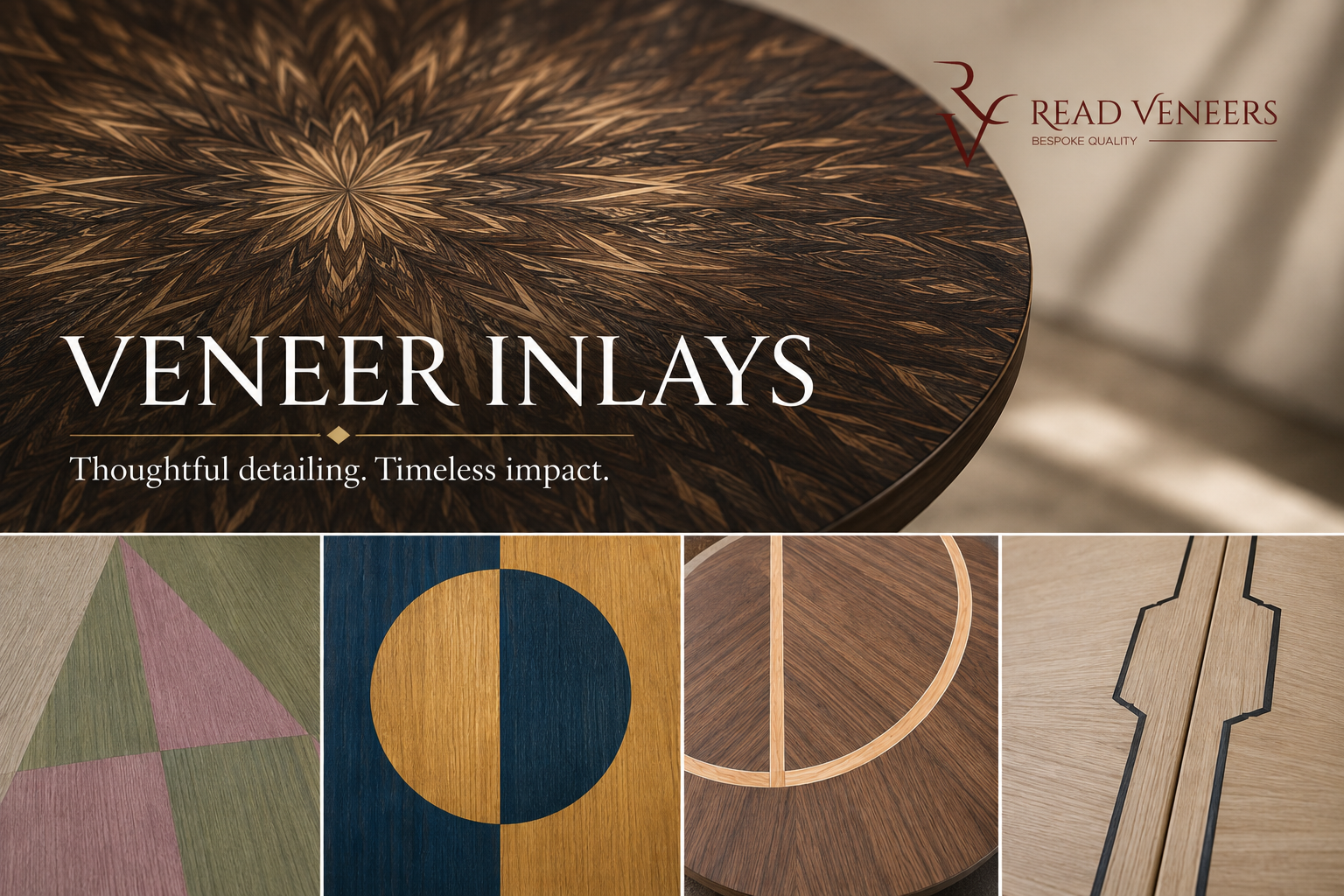
The most memorable interiors are often defined by the details. While colour palettes, lighting and layouts all play their part, it’s the carefully considered finishing touches that elevate a space from functional to exceptional.
Wood veneers already bring warmth, texture and the natural beauty of real timber to doors, wall panelling, furniture and bespoke joinery. Add a thoughtfully designed inlay, however, and those same surfaces become distinctive design features that capture attention without overpowering the overall scheme.
Whether used in luxury hotels, private residences, boardrooms or hospitality spaces, veneer inlays offer architects and designers an elegant way to introduce contrast, character and craftsmanship into high-end interiors.
What is a veneer inlay?
An inlay doesn’t have to be elaborate to make an impact. Sometimes, the simplest details are the ones that leave the strongest impression.
A veneer inlay is created by introducing a contrasting veneer into a panel to form a decorative feature. This could be a fine border around a door, a slim feature line across a boardroom table, geometric shapes within wall panelling or bespoke patterns that give furniture and interiors a distinctive identity.
By combining different timber species, grain directions and colours, designers can add depth, contrast and individuality while maintaining the natural warmth of real wood.
Inlays can be created using both natural and engineered veneers.
ALPI veneers, for example, offer exceptional consistency in colour and grain, making them particularly well suited to intricate designs and larger commercial projects where repeatability is essential. Manufactured in Italy from fast-growing timber sourced from sustainable plantations, they also provide an environmentally responsible alternative for architects and designers looking to achieve a precise, contemporary finish.
Whether the design is bold and geometric or understated and elegant, a carefully crafted veneer inlay demonstrates how thoughtful detailing can transform an otherwise simple panel into a standout design feature.
Why architects and designers choose inlays
Good interior design doesn’t always need to shout. More often than not, it’s the thoughtful details that leave the strongest impression.
Veneer inlays allow architects and designers to introduce individuality without overwhelming a space.
Whether creating a subtle border around a door, adding a contrasting feature strip to wall panelling or incorporating geometric patterns into bespoke furniture, inlays naturally draw the eye and create carefully considered focal points.
They also offer the opportunity to combine complementary veneers, contrasting timber species and different grain directions to produce designs that feel both distinctive and balanced.
In commercial settings, inlays can reinforce a brand identity or complement an interior scheme, while in private homes they add a level of craftsmanship that sets bespoke joinery apart from off-the-shelf alternatives.
Contemporary inlays often favour clean geometric patterns, fine decorative banding and understated linear details over elaborate ornamentation. The result is an elegant, timeless finish that enhances the natural beauty of the timber rather than competing with it.
The most successful inlays don’t dominate a design – they celebrate it.
Popular inlay styles
There are countless ways to customise veneered panels, from understated detailing to bold geometric designs. The right approach depends on the overall interior scheme, the intended atmosphere and how prominently the feature is intended to stand out.
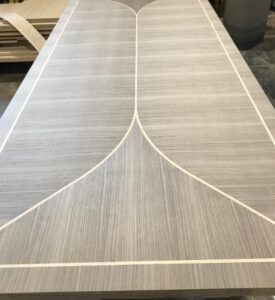
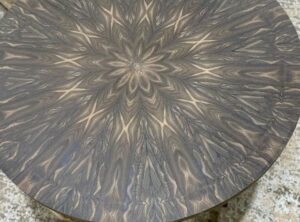
Bookmatched Centre Panels
Bookmatching uses consecutive veneer leaves arranged like the pages of an open book, creating a symmetrical mirror-image pattern. The result is a beautifully balanced centrepiece that celebrates the natural character of the timber while adding a sense of refinement and craftsmanship.
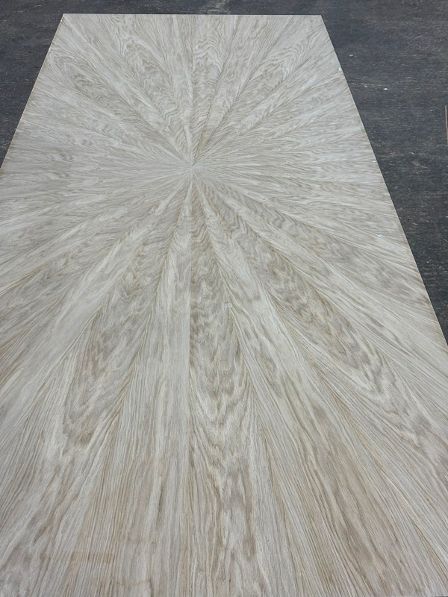
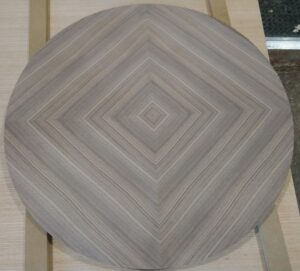
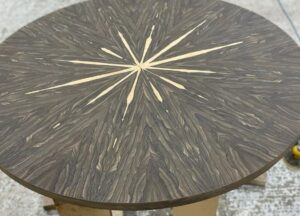
Starburst Layouts
Starburst layouts use carefully arranged veneer leaves to create dramatic symmetrical patterns that celebrate the natural beauty of the timber. The effect is exceptionally eye-catching and works beautifully for signature tabletops.
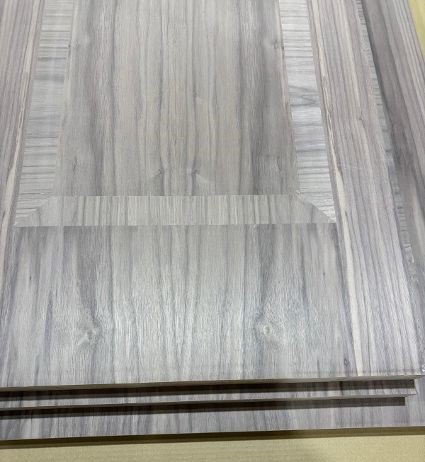
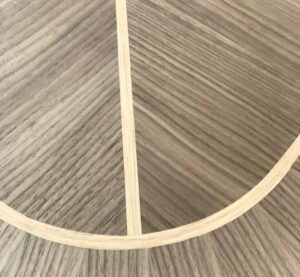
Fine Contrasting Borders
A simple border can completely transform a panel, framing doors, cabinetry and wall panelling with a subtle yet distinctive detail. Often created using contrasting timber species, these elegant lines add definition without distracting from the beauty of the main veneer.
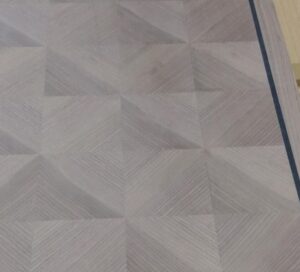
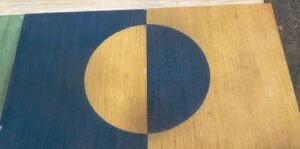
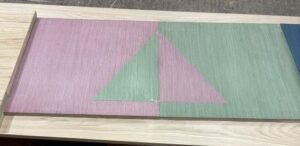
Geometric Designs
Contemporary geometric layouts have become increasingly popular in luxury interiors, combining contrasting veneers to create striking visual patterns. Whether bold and colourful using engineered veneers such as ALPI or more understated with natural timbers, geometric inlays create memorable feature pieces that immediately draw the eye.
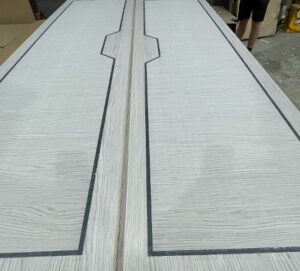
Cross-Banding and Feature Strips
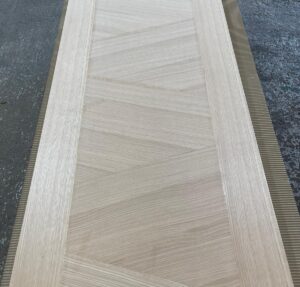
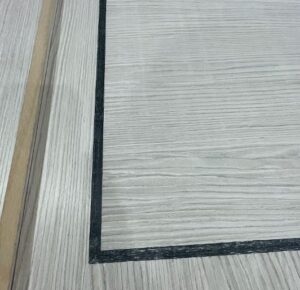
Cross-banding and fine feature strips introduce subtle contrast through changes in grain direction or carefully selected veneer species. They’re often used to break up larger surfaces, frame furniture or add visual rhythm to bespoke joinery.
Contemporary Linear Details
Minimalist interiors often rely on clean lines and restrained detailing. Fine linear inlays create interest without unnecessary decoration, complementing modern architecture while allowing the natural beauty of the wood to remain the focal point.
Marquetry and Parquetry
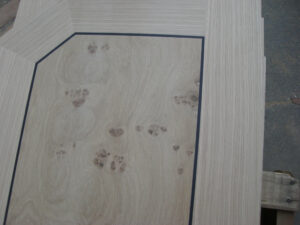
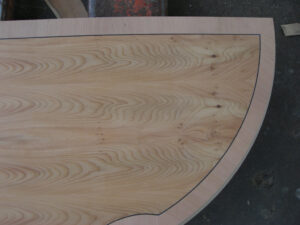
For projects where designers want to make an even bolder statement, marquetry and parquetry take veneer craftsmanship a step further. While parquetry uses repeating geometric patterns, marquetry creates decorative pictures and motifs using precisely cut veneers. Both techniques showcase the incredible versatility of wood veneers and demonstrate how inlays can become works of art in their own right.

Where veneer inlays work best
One of the greatest strengths of veneer inlays is their versatility. They can be incorporated into projects of almost any size, adding character to everything from bespoke furniture to large-scale commercial fit-outs.
In hotels and hospitality venues, inlays help reception desks, bars, bedroom furniture and feature walls make a lasting first impression without relying on excessive decoration.
Within private residences, they bring individuality to kitchens, wardrobes, dining tables and media units, creating bespoke interiors that reflect the owner’s style.
They’re equally effective in boardrooms and commercial offices, where subtle detailing can reinforce a premium brand image, or as decorative borders and centre panels on bespoke doors and wall panelling. Even a simple feature strip can transform an otherwise plain surface into a carefully considered design element.
As we’ve explored in our articles on wellbeing spaces, high-spec commercial interiors and performance and entertainment venues, it’s often these thoughtful finishing touches that elevate an interior from functional to truly memorable.
Veneer inlays are a perfect example of how exceptional craftsmanship can make a lasting impression without ever overwhelming the design.
Precision makes the difference
The most striking veneer inlays are often the ones that look completely effortless.
Crisp lines, seamless joins and perfectly balanced designs don’t happen by chance. They’re the result of meticulous craftsmanship at every stage of the manufacturing process.
From accurate cutting and careful veneer selection to precise veneer jointing, grain matching and pressing, every detail contributes to the finished result. Even the smallest inconsistency can disrupt the flow of a pattern or draw attention away from the design, which is why precision is so important when creating bespoke inlays.
When every joint aligns perfectly and every grain flows exactly as intended, the craftsmanship almost disappears from view. That’s exactly how it should be. The finished panel feels refined, balanced and beautifully natural because every stage behind the scenes has been carried out with skill, care and attention to detail.
It’s this commitment to precision that transforms a creative concept into an exceptional finished product.
Why choose Read Veneers?
Creating exceptional veneer inlays requires more than quality materials – it demands experience, precision and an eye for detail.
For more than 30 years, Read Veneers has worked alongside architects, designers, joinery contractors and furniture manufacturers to produce bespoke veneered panels, doors and furniture components for projects across the UK.
From one-off statement pieces to large production runs, we combine traditional craftsmanship with modern manufacturing techniques, working with both natural and engineered veneers to deliver consistently high-quality results.
When the details matter, we’re here to help bring your ideas to life.
Thoughtful detailing that stands the test of time
The most memorable interiors are rarely defined by bold statements alone. More often, it’s the thoughtful detailing, careful craftsmanship and quality of the materials that leave a lasting impression.
Veneer inlays offer architects and designers the opportunity to introduce individuality, elegance and visual interest while retaining all the practical benefits of professionally manufactured veneered panels.
Whether you’re designing a bespoke residential interior, a luxury hospitality space or a high-spec commercial environment, the right inlay can elevate an entire scheme.
If you’re planning a project and exploring bespoke veneer designs, we’d be delighted to discuss your ideas and help bring them to life.
Get in touch with the team at Read Veneers to find out how we can help.
